
⚡ Quick Summary
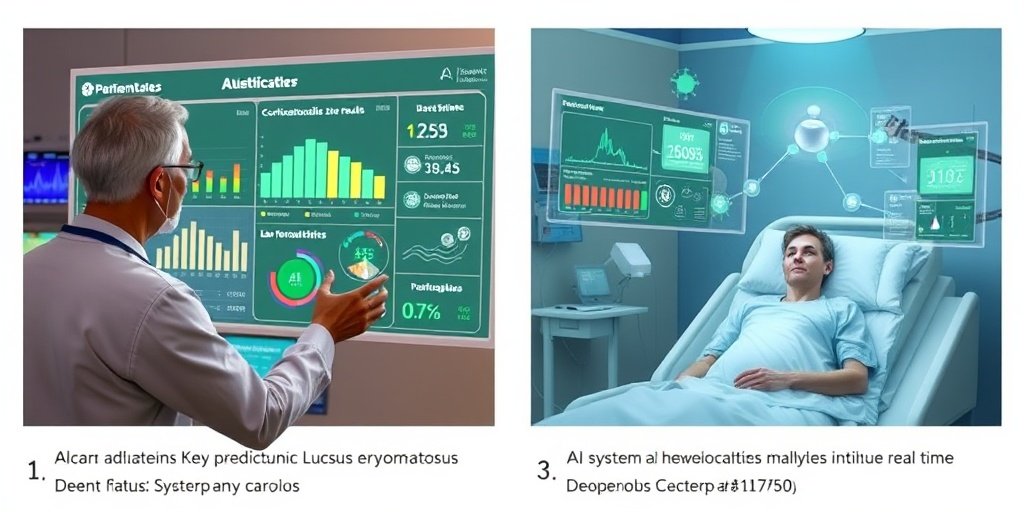
This study developed an explainable artificial intelligence (XAI) model to predict infections requiring hospitalization in patients with systemic lupus erythematosus (SLE). The model demonstrated a high predictive performance with an AUROC of 88%, highlighting its potential as a clinical decision-support tool.
🔍 Key Details
- 📊 Dataset: 18,331 patients from Taichung Veterans General Hospital (2012-2023)
- 🧩 Features used: 70 clinical variables narrowed to 15 key predictors
- ⚙️ Technology: XGBoost for machine learning
- 🏆 Performance: AUROC 88% in testing cohort, 84% in validation cohort
🔑 Key Takeaways
- 🤖 Machine learning can effectively predict serious infections in SLE patients.
- 📈 XGBoost achieved the highest predictive performance among tested algorithms.
- 🔍 Key predictors included corticosteroid use, hemoglobin level, and white blood cell count.
- 🌟 High specificity of 85% and excellent negative predictive value (NPV) of 98% were observed.
- 📊 Shapley Additive Explanations (SHAP) were utilized for model interpretation, enhancing clinical transparency.
- 🏥 Single-center study design suggests the need for external validation in future research.
- 💡 Potential for early identification of high-risk individuals in clinical settings.
📚 Background
Systemic lupus erythematosus (SLE) is a complex autoimmune disease that can lead to various complications, including serious infections. Predicting these infections is crucial for timely intervention and management. Traditional methods often lack the precision needed for effective clinical decision-making. The integration of machine learning offers a promising avenue for enhancing predictive capabilities in this patient population.
🗒️ Study
Conducted at Taichung Veterans General Hospital, this retrospective study analyzed outpatient data from 2012 to 2023. Researchers aimed to develop an XAI-based machine learning model to predict infections that necessitate hospitalization in SLE patients. By employing Lasso regression for feature selection, they narrowed down the clinical variables to the most significant predictors.
📈 Results
The study included data from 18,331 patients, with the final model identifying 15 key predictors from an initial pool of 70 clinical variables. The XGBoost model achieved an impressive AUROC of 88% in the testing cohort and 84% in the temporal validation cohort. Additionally, the model exhibited a high specificity of 85% and an excellent negative predictive value of 98%.
🌍 Impact and Implications
The findings from this study have significant implications for clinical practice. By utilizing an explainable machine learning model, healthcare providers can enhance their ability to predict serious infections in SLE patients, leading to timely interventions. The incorporation of SHAP-based explanations not only improves model transparency but also fosters trust among clinicians, ultimately benefiting patient care.
🔮 Conclusion
This research highlights the transformative potential of explainable machine learning in predicting infections in SLE patients. The development of an interpretable model serves as a valuable tool for clinicians, enabling early identification of high-risk individuals. Future studies should focus on external validation to further establish the model’s efficacy and applicability in diverse clinical settings.
💬 Your comments
What are your thoughts on the use of machine learning in predicting infections for SLE patients? We would love to hear your insights! 💬 Share your comments below or connect with us on social media:
Explainable machine learning for predicting infections that require hospitalization in patients with systemic lupus erythematosus.
Abstract
OBJECTIVES: To develop and validate an explainable artificial intelligence (XAI)-based machine learning (ML) model for predicting infections requiring hospitalization in patients with systemic lupus erythematosus (SLE).
METHODS: Outpatient data at Taichung Veterans General Hospital (2012-2023) were analyzed retrospectively. Infections were identified using ICD-9 and ICD-10 codes. Clinical variables, including demographic information, laboratory results, and medication history were used to train ML algorithms. Lasso regression was used for feature selection and narrowing the model to key predictors. Model performance was evaluated using AUROC, sensitivity, specificity, precision, and negative predictive value (NPV).
RESULTS: Data from 18 331 patients were included in the study. The number of key predictors was narrowed to 15 from 70 clinical variables. XGBoost achieved the highest predictive performance, with an AUROC of 88% in the testing cohort and 84% in the temporal validation cohort. Shapley Additive Explanations values were used to interpret model outputs, identifying corticosteroid use, haemoglobin level, and white blood cell count as the top predictors. The model demonstrated high specificity (85%) and excellent NPV (98%).
CONCLUSION: We developed an interpretable ML model as a supporting tool for predicting serious infections in SLE patients. The integration of SHAP-based explanations enhances clinical transparency and supports early identification of high-risk individuals, although the single-center, retrospective design warrants external validation in future studies.
Author: [‘Huang CT’, ‘Wang MS’, ‘Tsai SF’, ‘Chen YJ’, ‘Chen YH’, ‘Chen CH’, ‘Wu CL’, ‘Huang WN’, ‘Chen HH’]
Journal: Rheumatology (Oxford)
Citation: Huang CT, et al. Explainable machine learning for predicting infections that require hospitalization in patients with systemic lupus erythematosus. Explainable machine learning for predicting infections that require hospitalization in patients with systemic lupus erythematosus. 2026; (unknown volume):(unknown pages). doi: 10.1093/rheumatology/keag199