
⚡ Quick Summary
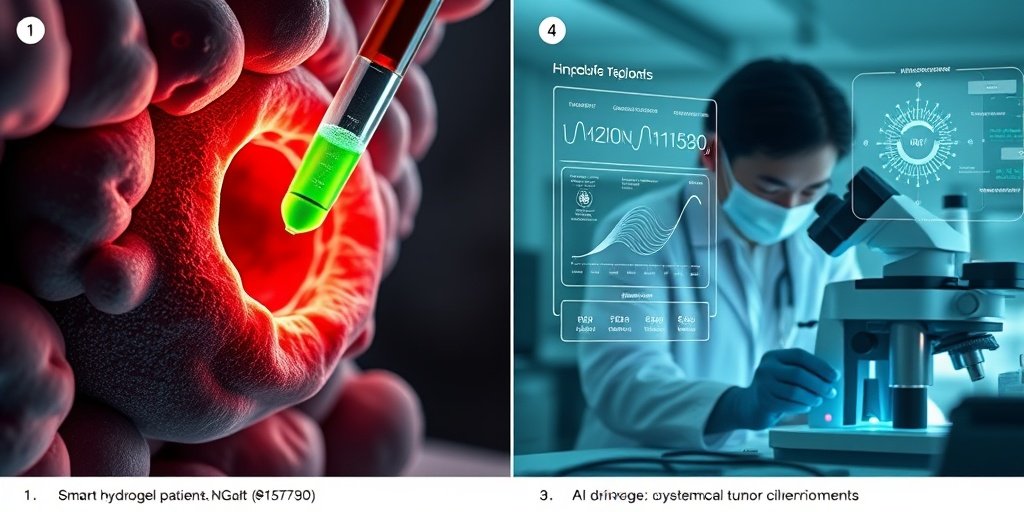
This review highlights the potential of next-generation injectable hydrogels in overcoming multidrug resistance (MDR) in cancer treatment. By actively remodeling the tumor microenvironment (TME), these hydrogels offer a promising strategy to enhance drug delivery and efficacy.
🔍 Key Details
- 📊 Focus: Overcoming cancer multidrug resistance (MDR)
- 🧬 Technology: Next-generation injectable hydrogels
- ⚙️ Mechanisms: Biomechanical softening, metabolic disruption, and immunomodulation
- 🌐 Integration: Artificial intelligence-driven design and patient-derived organoids
🔑 Key Takeaways
- 💡 MDR is a significant barrier to effective cancer treatment.
- 🌱 Injectable hydrogels can actively modulate the tumor microenvironment.
- 🔬 Mechanobiology and immunometabolism are key principles in this approach.
- ⚡ Softening the extracellular matrix can enhance drug delivery.
- 🧪 Nanogel-enabled trafficking helps bypass drug efflux mechanisms.
- 🛡️ Immunomodulatory niches can stimulate antitumor immunity.
- 🤖 AI and organoids bridge laboratory research with clinical applications.
- 🌍 Potential to transform the TME into a therapeutic target.
📚 Background
Multidrug resistance (MDR) in cancer therapy is a complex challenge, primarily driven by interactions between cancer cells and their surrounding tumor microenvironment (TME). Traditional drug delivery methods often fall short due to the heterogeneous nature of tumors and the limitations of passive delivery systems. This necessitates innovative approaches to enhance treatment efficacy and patient outcomes.
🗒️ Study
The review discusses the emerging role of smart hydrogels as a solution to MDR. These hydrogels are designed to provide localized drug delivery while simultaneously modifying the TME to improve therapeutic responses. By integrating principles from mechanobiology and immunometabolism, the authors propose a multi-faceted strategy to combat MDR effectively.
📈 Results
The authors emphasize that the biomechanical softening of the extracellular matrix can decouple mechanotransduction pathways, specifically those involving Yes-associated protein (YAP) and transcriptional coactivator with PDZ-binding motif (TAZ). Additionally, disrupting hypoxia-driven bioenergetics can further enhance drug efficacy. The review also highlights how nanogel technology can facilitate drug delivery by circumventing intracellular sequestration and efflux transporters.
🌍 Impact and Implications
The findings from this review could significantly impact cancer treatment strategies. By utilizing smart hydrogels, we can potentially overcome the limitations of traditional drug delivery systems, leading to improved patient outcomes. This innovative approach not only addresses the challenges of MDR but also opens new avenues for enhancing antitumor immunity, making the TME a viable target for therapeutic interventions.
🔮 Conclusion
The review underscores the transformative potential of smart hydrogels in addressing cancer multidrug resistance. By actively remodeling the tumor microenvironment and integrating advanced technologies, we can enhance drug delivery and efficacy. Continued research in this area is essential to fully realize the clinical applications of these innovative strategies, paving the way for more effective cancer therapies.
💬 Your comments
What are your thoughts on the use of smart hydrogels in cancer treatment? We would love to hear your insights! 💬 Join the conversation in the comments below or connect with us on social media:
Smart hydrogels for overcoming cancer multidrug resistance.
Abstract
Multidrug resistance (MDR) remains the principal impediment to curative oncology, driven by complex interplays between cancer cells and the tumor microenvironment (TME). While nanomedicines have sought to overcome these delivery barriers, their clinical translation is often hampered by the heterogeneity of the enhanced permeability and retention (EPR) effect and by inefficient intratumoral delivery. In this review, we argue that overcoming MDR requires a transition beyond traditional passive drug delivery, advocating active, localized remodeling of the tumor ecosystem. Next-generation injectable hydrogels are increasingly recognized as localized viscoelastic niches that combine controlled intratumoral retention with the capacity to actively modulate biological responses within tumor TME. By converging principles of mechanobiology and immunometabolism, these hydrogels enable a multi-tiered strategy to dismantle multidimensional MDR. This approach begins with the biomechanical softening of the extracellular matrix to decouple mechanotransduction driven by Yes-associated protein (YAP) and transcriptional coactivator with PDZ-binding motif (TAZ), followed by the metabolic disruption of hypoxia-driven bioenergetics. Beyond the extracellular landscape, nanogel-enabled trafficking allows payloads to circumvent intracellular sequestration and efflux transporters, while immunomodulatory niches mobilize antitumor immunity through in situ vaccination and myeloid reprogramming. Finally, we evaluate the integration of artificial intelligence-driven design and patient-derived organoids as a technical bridge to reconcile laboratory ingenuity with clinical utility, aiming to transform the TME into a vulnerable therapeutic target.
Author: [‘Wang Y’, ‘Liu B’, ‘Huang ZF’, ‘Patel H’, ‘Yu J’, ‘Hu M’, ‘Chen ZS’]
Journal: Mol Cancer
Citation: Wang Y, et al. Smart hydrogels for overcoming cancer multidrug resistance. Smart hydrogels for overcoming cancer multidrug resistance. 2026; (unknown volume):(unknown pages). doi: 10.1186/s12943-026-02660-3