⚡ Quick Summary
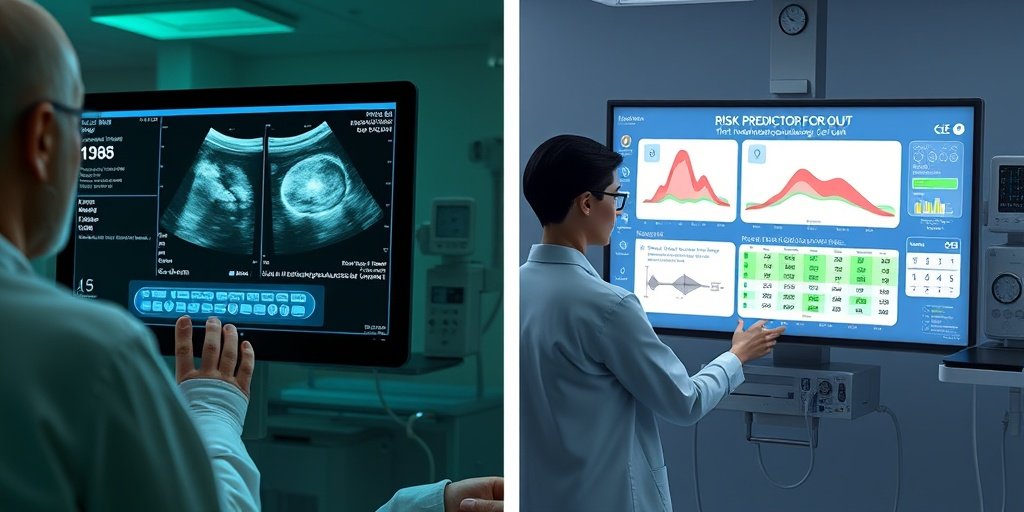
This study developed a combined risk prediction model for gout by integrating clinical data, ultrasound features, and deep learning predictions. The model demonstrated excellent performance with an AUC of 0.904 in the internal testing cohort, highlighting its potential for clinical application.
🔍 Key Details
- 📊 Dataset: 609 cases from two centers
- 🧩 Features used: Clinical data, ultrasound features, deep learning predictions
- ⚙️ Technology: Deep learning for diagnostic predictions
- 🏆 Performance: AUC of 0.904 (ITC), AUC of 0.881 (ETC)
🔑 Key Takeaways
- 📊 Integrated model combines clinical data, ultrasound features, and deep learning.
- 💡 Seven risk predictors identified: gender, serum uric acid, eGFR, tophus, bone erosion, double contour sign, and DL prediction.
- 🏆 Best performance achieved with the combined model, showing AUC values of 0.904 and 0.881.
- 📈 Calibration plots and decision curve analysis confirmed clinical utility.
- 🌍 Study conducted across two centers, enhancing the robustness of findings.
- 🔍 Logistic regression analysis identified independent risk factors for gout.
- 🗒️ Nomogram developed for practical use in predicting gout risk.
📚 Background
Gout is a common form of inflammatory arthritis characterized by sudden and severe pain, redness, and swelling in the joints. Traditional risk assessment methods often rely solely on clinical data, which may overlook critical factors. The integration of ultrasound features and deep learning presents a promising avenue for enhancing risk prediction and improving patient outcomes.
🗒️ Study
This retrospective multicenter study involved 609 patients who underwent ultrasound examination of the first metatarsophalangeal joint. Data from one center was split into a training group and an internal testing cohort, while data from another center served as an external testing cohort. The study aimed to develop a comprehensive model that incorporates various risk factors for gout.
📈 Results
The combined model, which included clinical data, ultrasound features, and deep learning predictions, achieved an AUC of 0.904 in the internal testing cohort and 0.881 in the external testing cohort. The Brier scores were 0.100 and 0.160, respectively, indicating strong predictive accuracy. The decision curve analysis confirmed the model’s clinical utility, making it a valuable tool for healthcare providers.
🌍 Impact and Implications
The findings from this study could significantly impact the management of gout by providing a more accurate and comprehensive risk assessment tool. By integrating advanced technologies like deep learning with traditional clinical assessments, healthcare professionals can better identify at-risk patients and tailor interventions accordingly. This approach not only enhances patient care but also contributes to more efficient healthcare practices.
🔮 Conclusion
This study highlights the potential of an integrated risk prediction model for gout, combining clinical data, ultrasound features, and deep learning. The development of a nomogram based on identified risk predictors offers a practical tool for clinicians to assess gout risk effectively. Continued research in this area is essential to refine these models and further improve patient outcomes in gout management.
💬 Your comments
What are your thoughts on the integration of deep learning and ultrasound in predicting gout risk? We would love to hear your insights! 💬 Leave your comments below or connect with us on social media:
An Integrated Risk Prediction Model for Gout Using Clinical Data, Ultrasound Features, and Deep Learning: A Retrospective Multicenter Study.
Abstract
PURPOSE: To develop and validate a combined model for predicting gout risk by integrating ultrasound (US) features as novel risk factors with clinical data and predictions from deep learning (DL) models.
PATIENTS AND METHODS: This retrospective study included 609 cases who underwent first metatarsophalangeal (MTP1) joint US at two centers. Data from Center 1 were divided into a training group (70%, n = 355) and an internal testing cohort (ITC) (30%, n = 162). Data from Center 2 served as an external testing cohort (ETC) (n = 92). A DL diagnostic model based on MTP1 US images was developed to obtain diagnostic predictions. Clinical data, US features, and DL predictions were integrated, and logistic regression analysis was performed to identify independent risk factors. Various models were constructed (clinical, US, clinical-US, clinical-DL, and combined), and the best model was interpreted with a nomogram. Multicollinearity was assessed using the variance inflation factor. Model performance was evaluated using the receiver operating characteristic (ROC) curves, calibration plots, and decision curve analysis (DCA).
RESULTS: The combined model, incorporating clinical data (gender, serum uric acid [SUA]), US features (tophus, double contour sign (DCs), bone erosion), and DL predictions, exhibited the best performance. For the ITC, the area under the curve (AUC) and Brier scores were 0.904 (95% CI: 0.843~0.965) and 0.100 (0.066~0.140), respectively. For the ETC, they were 0.881 (95% CI: 0.815~0.947) and 0.160 (0.107~0.221). DCA confirmed the clinical utility of the combined nomogram.
CONCLUSION: A nomogram was constructed based on seven risk predictors (gender, SUA, estimated glomerular filtration rate (eGFR), tophus, bone erosion, DCs, and DL prediction) to predict and quantify gout risk.
Author: [‘Xiao L’, ‘Zhao Y’, ‘Li Y’, ‘Yan M’, ‘Liu Y’, ‘Li C’, ‘Liu M’, ‘Ning C’]
Journal: J Inflamm Res
Citation: Xiao L, et al. An Integrated Risk Prediction Model for Gout Using Clinical Data, Ultrasound Features, and Deep Learning: A Retrospective Multicenter Study. An Integrated Risk Prediction Model for Gout Using Clinical Data, Ultrasound Features, and Deep Learning: A Retrospective Multicenter Study. 2026; 19:543363. doi: 10.2147/JIR.S543363