
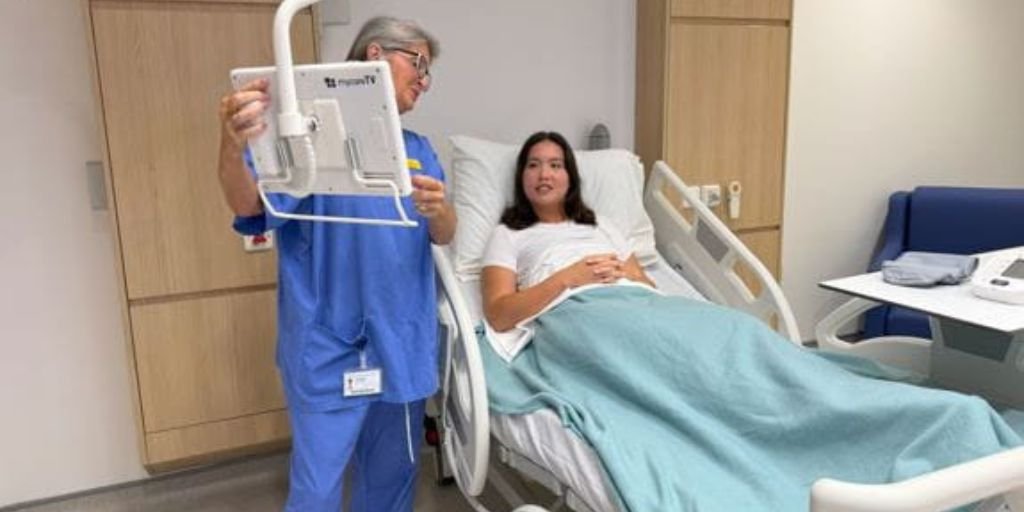

Patients at James Paget University Hospitals NHS Foundation Trust will soon have access to a new digital bedside service thanks to a collaboration with Airwave Healthcare. This initiative will introduce integrated technology that enhances entertainment, communication, and access to hospital services.
Key Features of the New Bedside Service:
- Implementation of bedside terminals in the award-winning Concept Ward.
- Access to the MyCareTV platform for personalized entertainment options.
- Smart TVs in single-occupancy rooms and tablets in multi-bed bays.
- Integration of educational and therapeutic video content for patient recovery.
- Video and voice calling capabilities for family communication.
- Control over room environment settings like lighting and temperature.
- Electronic meal ordering to enhance patient choice and reduce waste.
Patient-Centric Approach
The introduction of these bedside terminals is a direct response to patient feedback collected through the NHS Friends and Family Test, which indicated a strong desire for improved access to entertainment. This service will be funded by the James Paget Hospital Charity for an initial three-year period.
Benefits of the New System:
- Improved patient experience and reduced feelings of loneliness.
- Enhanced recovery support through tailored educational content.
- Increased patient engagement in their own care.
- Reduction in non-clinical interruptions for staff.
Rob Watson, Chief Nursing Projects Officer for the Future Paget Programme, emphasized the importance of this innovation, stating that it aims to create a digital gateway at the bedside, allowing patients to engage more easily with hospital services. He noted that the goal is to provide a flexible platform that evolves into a multifunctional bedside hub.
Dean Moody, Healthcare Services Director at Airwave Healthcare, highlighted the significance of embedding technology that genuinely enhances patient and staff experiences in clinical environments.
This initiative aligns with the NHS’s commitment to improving patient care through thoughtful use of technology, ultimately aiming to empower patients and reduce inequalities in access to services.