⚡ Quick Summary
This review highlights the role of natural polyphenols in modulating macrophage polarization, which is crucial for managing chronic inflammatory diseases. By targeting key signaling pathways, these compounds show potential in promoting M2 polarization for anti-inflammatory effects and M1 polarization for cancer therapy.
🔍 Key Details
- 📊 Focus: Macrophage polarization in chronic inflammatory diseases
- 🧬 Compounds: Natural polyphenols
- ⚙️ Mechanisms: Targeting NF-κB, JAK/STAT, PI3K/Akt, and Notch pathways
- 🏆 Therapeutic potential: Chronic inflammation and cancer therapy
🔑 Key Takeaways
- 🌱 Polyphenols exhibit immunomodulatory properties that can influence macrophage behavior.
- 🔄 M1 and M2 polarization are critical in the context of inflammation and cancer.
- 💡 Innovative approaches like nanotechnology and synthetic biology can enhance polyphenol efficacy.
- 📈 Therapeutic duality: Polyphenols can promote M2 polarization to resolve inflammation and M1 polarization for cancer treatment.
- 🧪 Research sources: Data collected from Web of Science and PubMed.
- 🌍 Implications: Potential applications in treating atherosclerosis, metabolic diseases, and neurodegenerative disorders.
📚 Background
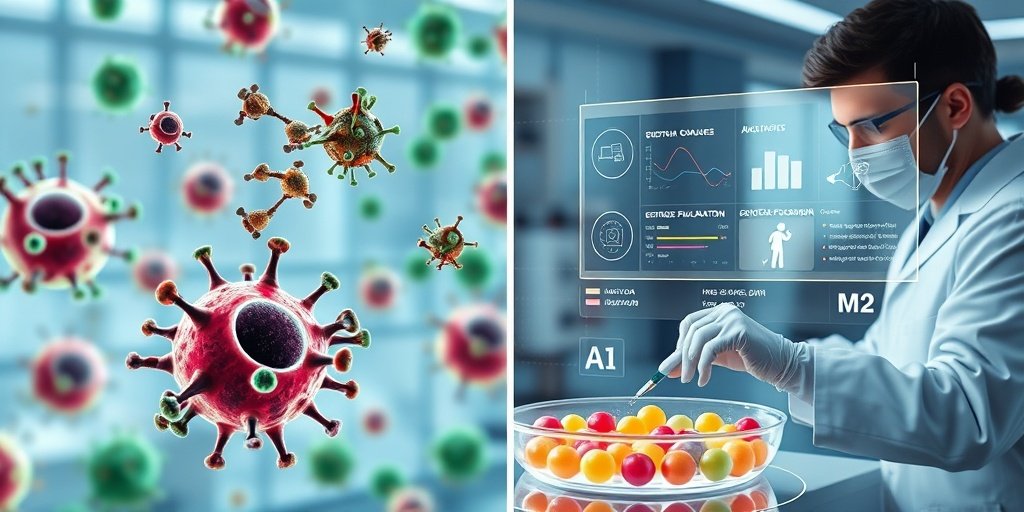
Chronic inflammatory diseases pose significant health challenges worldwide, often resulting from an imbalance in macrophage polarization. The M1 phenotype is associated with pro-inflammatory responses, while the M2 phenotype is linked to anti-inflammatory effects. Understanding how to modulate this polarization can lead to innovative therapeutic strategies.
🗒️ Study
This review synthesizes findings from various studies to explore how natural polyphenols can influence macrophage polarization. By examining their effects on critical signaling pathways, the authors aim to elucidate the mechanisms through which these compounds can be harnessed for therapeutic purposes.
📈 Results
The review reveals that polyphenols primarily promote M2 polarization, which is beneficial for resolving chronic inflammatory diseases such as atherosclerosis and metabolic disorders. Additionally, their ability to induce M1 polarization opens new avenues for cancer immunotherapy, showcasing their therapeutic versatility.
🌍 Impact and Implications
The findings from this review suggest that natural polyphenols could play a transformative role in the treatment of chronic inflammatory diseases and cancer. By leveraging their ability to modulate macrophage polarization, we can develop more effective therapies that address the underlying mechanisms of these conditions. The integration of advanced technologies like nanotechnology and artificial intelligence could further enhance the therapeutic potential of these compounds.
🔮 Conclusion
This review underscores the promising role of natural polyphenols as immunomodulators in chronic inflammatory diseases and cancer therapy. Their dual ability to promote M2 polarization for anti-inflammatory effects and M1 polarization for cancer treatment positions them as valuable assets in modern medicine. Continued research in this area is essential to fully realize their potential and develop innovative therapeutic strategies.
💬 Your comments
What are your thoughts on the potential of polyphenols in modulating macrophage polarization? We would love to hear your insights! 💬 Leave your comments below or connect with us on social media:
Polyphenols as Modulators of Macrophage Polarization: Mechanisms and Therapeutic Potential in Chronic Inflammatory Diseases.
Abstract
Macrophage polarization between pro-inflammatory M1 and anti-inflammatory M2 phenotypes is pivotal in chronic inflammatory diseases, offering a key therapeutic target. Natural polyphenols exhibit promising immunomodulatory capacity. This review illustrates how polyphenols target key signaling pathways (NF-κB, JAK/STAT, PI3K/Akt, and Notch) to subsequently direct macrophage polarization, and reveals their potential therapeutic effects in chronic inflammatory diseases. The literature was collected from the Web of Science and PubMed databases using relevant search terms, such as “natural polyphenols,” “macrophage polarization,” “natural products,” “signaling pathways,” “chronic inflammation,” “anti-inflammatory,” and “pharmacokinetics.” Polyphenols exert their effects by modulating core signaling pathways, with the resultant reprogramming of macrophage polarization being a key consequential event. These compounds primarily promote M2 polarization, thereby resolving chronic inflammatory-related diseases, including atherosclerosis, metabolic diseases, and neurodegenerative diseases. Meanwhile, their ability to induce M1 polarization also provides new intervention strategies for cancer therapy. In addition to overcome the limitations of low bioavailability and low toxicity of polyphenols, this review proposes innovative approaches including nanotechnology, synthetic biology, and artificial intelligence. Polyphenols modulate macrophage polarization via signaling pathways, demonstrating therapeutic duality: promoting M2 polarization to resolve chronic inflammation while inducing M1 polarization for cancer immunotherapy. This insight positions them as promising immunomodulators.
Author: [‘Huang H’, ‘Fan B’, ‘Wei C’, ‘Song Y’, ‘Jiang W’, ‘Huang Q’, ‘Deng D’, ‘Wang F’, ‘Yao M’]
Journal: Phytother Res
Citation: Huang H, et al. Polyphenols as Modulators of Macrophage Polarization: Mechanisms and Therapeutic Potential in Chronic Inflammatory Diseases. Polyphenols as Modulators of Macrophage Polarization: Mechanisms and Therapeutic Potential in Chronic Inflammatory Diseases. 2026; (unknown volume):(unknown pages). doi: 10.1002/ptr.70181