⚡ Quick Summary
This study utilized artificial intelligence (AI) to derive phenotypes of prehospital acute life-threatening trauma, identifying three distinct clusters of trauma patients. The findings revealed a concerning 2-day in-hospital mortality rate of 8.3%, with significant implications for emergency medical services.
🔍 Key Details
- 📊 Dataset: 1,474 adult trauma patients
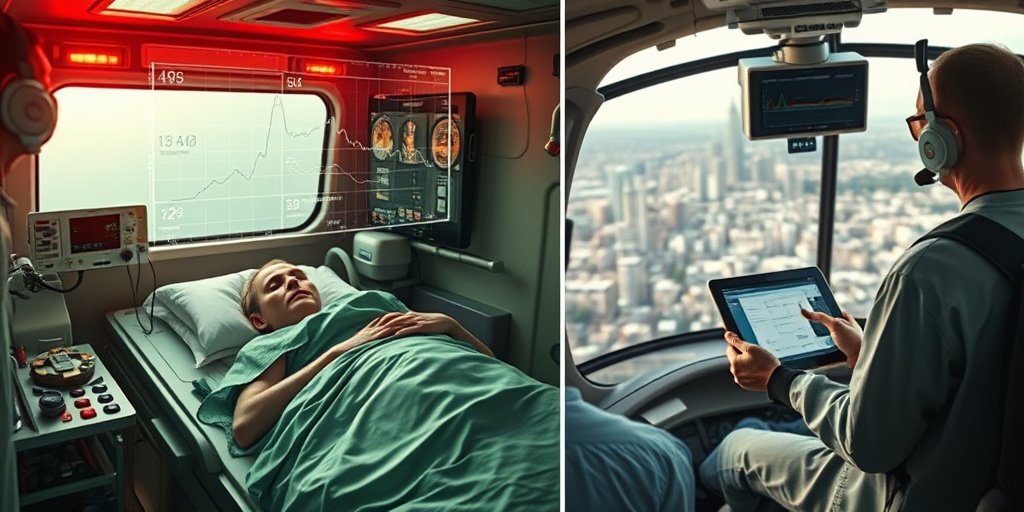
- 🚑 Setting: 147 ambulances, 4 helicopters, and 11 hospitals in Spain
- 🗓️ Study Duration: January 2021 to August 2024
- ⚙️ Methodology: Nonsupervised AI clustering methods
- 🏥 Primary Outcome: All-cause 2-day in-hospital mortality
🔑 Key Takeaways
- 🤖 AI clustering effectively identified three trauma phenotypes.
- 📉 Mortality Rates: T-1 (93.1%), T-2 (68.1%), T-3 (10.6%).
- 🧠 T-1 phenotype primarily involves traumatic brain injuries.
- 🦴 T-3 phenotype predominantly includes orthopedic trauma.
- 💡 Implications for therapy and resource optimization in emergency care.
- 🌍 Multicenter study enhances the generalizability of findings.
- 📈 Potential for improved patient outcomes through better risk characterization.
📚 Background
Trauma patients often present with complex conditions that complicate risk assessment and management. Traditional methods of characterizing trauma can be inadequate, leading to challenges in treatment decisions. The integration of artificial intelligence into trauma care offers a promising avenue for enhancing patient outcomes by enabling more precise risk stratification.
🗒️ Study
This prospective multicenter study involved adult trauma patients treated in prehospital settings across Spain. Researchers collected a comprehensive dataset, including epidemiological variables, trauma-related data, baseline vital signs, and blood tests, to derive phenotypes of life-threatening trauma using AI-driven clustering methods.
📈 Results
The study included a total of 1,474 patients, revealing a 2-day in-hospital mortality rate of 8.3%. The AI clustering identified three distinct phenotypes:
- T-1 phenotype: 6.9% of cases with a mortality rate of 93.1% (mainly traumatic brain injuries).
- T-2 phenotype: 23.6% of cases with a mortality rate of 68.1% (similar distribution to T-1).
- T-3 phenotype: 69.5% of cases with a mortality rate of 10.6% (predominantly orthopedic trauma).
🌍 Impact and Implications
The findings from this study have significant implications for emergency medical services. By utilizing AI-driven clustering, healthcare providers can better characterize trauma patients, leading to optimized treatment strategies and resource allocation. This innovative approach could ultimately enhance patient outcomes and improve the efficiency of trauma care systems.
🔮 Conclusion
This study highlights the transformative potential of artificial intelligence in the field of trauma care. By identifying distinct phenotypes of life-threatening trauma, AI can aid in risk stratification and improve therapeutic interventions. Continued research in this area is essential to fully realize the benefits of AI in enhancing patient care and outcomes in emergency settings.
💬 Your comments
What are your thoughts on the use of AI in trauma care? We would love to hear your insights! 💬 Leave your comments below or connect with us on social media:
Artificial intelligence-driven clustering for phenotyping life-threatening prehospital trauma.
Abstract
BACKGROUND: Traumatic patients usually suffer from several complex conditions that hinder their risk characterization. The aim of this study was to derive phenotypes of prehospital acute life-threatening trauma via nonsupervised artificial intelligence (AI) clustering methods.
METHODS: This was a prospective multicenter study in adult trauma patients treated in prehospital care and transferred to the emergency department. The study included 147 ambulances, 4 helicopters, and 11 hospitals in Spain between 1 January 2021 and 31 August 2024. Epidemiological variables, trauma-related data, baseline vital signs and blood tests were collected. The primary outcome was all-cause 2-day in-hospital mortality.
RESULTS: A total of 1474 patients were included, with a 2-day in-hospital mortality rate of 8.3%. The selected clustering method identified three clusters: the T-1 phenotype comprised 6.9% (101 cases) with a mortality rate of 93.1%, the T-2 phenotype represented 23.6% (348 cases) with a mortality rate of 68.1%, and T-3 represented 69.5% (1,025 cases) with a mortality rate of 10.6%. The T-1 phenotype mainly involves traumatic brain injuries, followed by thoracic trauma and burns; the T-2 phenotype presents a similar distribution; and the T-3 phenotype predominantly involves orthopedic trauma.
CONCLUSION: The AI method identified three clusters with implications for therapy and outcomes. This novel approach could help emergency medical services characterize trauma patients by providing benefits, treatment and resource optimization.
Author: [‘Pérez-García R’, ‘Alonso E’, ‘López-Izquierdo R’, ‘Del Pozo Vegas C’, ‘Idoyaga M’, ‘Losada A’, ‘Martín-Conty JL’, ‘Polonio-López B’, ‘Sanz-García A’, ‘Martín-Rodríguez F’]
Journal: Scand J Trauma Resusc Emerg Med
Citation: Pérez-García R, et al. Artificial intelligence-driven clustering for phenotyping life-threatening prehospital trauma. Artificial intelligence-driven clustering for phenotyping life-threatening prehospital trauma. 2026; (unknown volume):(unknown pages). doi: 10.1186/s13049-026-01553-0