⚡ Quick Summary
This narrative review highlights the transformative role of telemedicine in emergency care, showcasing its ability to bridge gaps in access to specialist services, particularly in underserved communities. The findings indicate significant improvements in clinical outcomes, patient satisfaction, and overall efficiency of emergency services.
🔍 Key Details
- 📊 Focus: The role of telemedicine in emergency and critical care systems.
- 🌍 Scope: Global case studies from both high- and low-resource settings.
- ⚙️ Technologies: Telestroke services, remote critical care, and emerging innovations like AI and wearable devices.
- 📈 Outcomes: Improvements in clinical effectiveness and patient satisfaction.
🔑 Key Takeaways
- 🌐 Telemedicine has evolved into a central component of emergency care.
- 🚑 Access to specialist care has improved significantly in underserved areas.
- 📈 Evidence shows advancements in clinical outcomes and patient satisfaction.
- 🤝 Collaboration across sectors is essential for overcoming existing challenges.
- 🔍 Future research should focus on long-term outcomes and telemedicine’s role in disaster response.
- 💡 Innovations like AI and scalable telehealth platforms are promising for future developments.
- ⚖️ Regulatory barriers and digital literacy gaps remain significant challenges.
- 📅 Published: 2025 in Cureus, by Idahor CO et al.
📚 Background
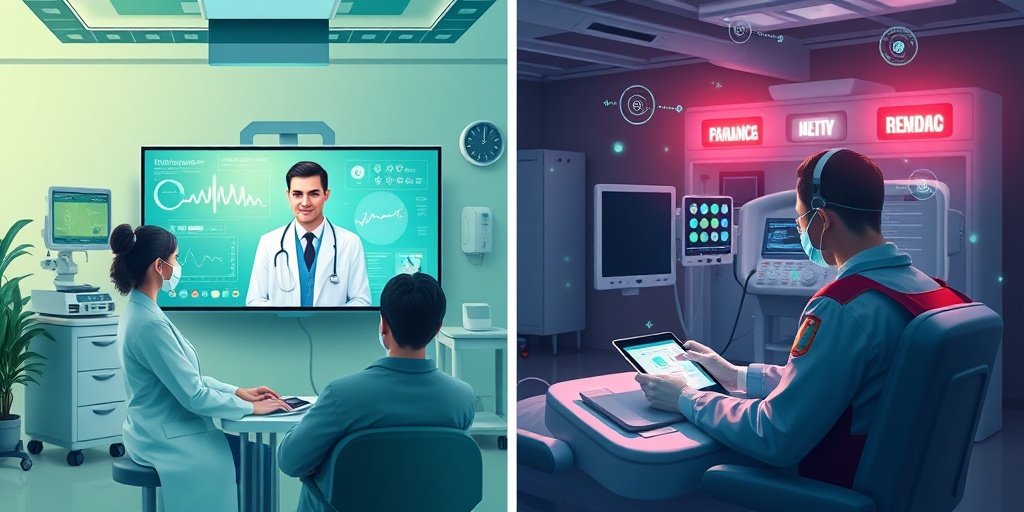
The integration of telemedicine into emergency care represents a significant shift in how healthcare is delivered. Historically, emergency services have faced challenges related to geographical barriers and resource limitations, particularly in rural and underserved communities. Telemedicine offers a solution by providing timely access to specialist care, thereby enhancing the overall effectiveness of emergency response systems.
🗒️ Study
This narrative review synthesizes existing literature on the role of telemedicine in emergency care, tracing its historical development and current applications. It highlights various case studies that demonstrate successful implementations of telemedicine in both high- and low-resource settings, showcasing its potential to improve patient outcomes and operational efficiency.
📈 Results
The review reveals that telemedicine has led to notable improvements in clinical outcomes, with evidence supporting enhanced patient satisfaction and operational effectiveness. Global case studies illustrate how telemedicine has been successfully integrated into emergency care systems, particularly through services like telestroke and remote critical care.
🌍 Impact and Implications
The implications of this review are profound. By addressing geographical and infrastructural gaps, telemedicine has the potential to create a more equitable healthcare landscape. The findings underscore the need for strategic investments and policy reforms to facilitate the widespread adoption of telemedicine, ultimately leading to a more accessible and responsive emergency care system.
🔮 Conclusion
This narrative review highlights the transformative potential of telemedicine in emergency care. As we look to the future, it is crucial to continue fostering innovation and collaboration to overcome existing challenges. By doing so, we can fully realize the promise of telemedicine in creating a more effective and equitable emergency care environment.
💬 Your comments
What are your thoughts on the integration of telemedicine in emergency care? We would love to hear your insights! 💬 Share your comments below or connect with us on social media:
Transforming Emergency Care Through Telemedicine: A Narrative Review.
Abstract
Telemedicine has fleetly evolved from a niche result to a central pillar in modern emergency and critical care systems. This narrative review delves into the multifaceted role of telemedicine in emergency settings, tracing its historical development, present applications, and future possibilities. It examines how telemedicine islands geographical and infrastructural gaps, particularly in underserved communities, by enabling timely access to specialist care similar to telestroke services and remote ferocious care. Substantiation highlights advancements in clinical outcomes, functional effectiveness, and patient satisfaction, with global case studies demonstrating successful perpetration across both high- and low-resource settings. Despite these advances, challenges persist. Technological restrictions, regulatory barriers, digital knowledge gaps, and unlikeness in assent continue to hamper wide relinquishment. This review discusses these obstacles and underscores the significance of strategic investment, cross-sector collaboration, and policy reform. Arising inventions, including artificial intelligence, wearable devices, and scalable telehealth platforms, signal promising directions for perfecting reach and adaptability in emergency systems. Additionally, this paper identifies crucial areas for unborn research, including long-term outgrowth assessment and telemedicine’s part in disaster and pandemic response. By synthesizing current substantiation and practical perceptivity, this review aims to inform clinicians, health system leaders, and policymakers about the transformative eventuality and ongoing challenges of telemedicine in emergency care. Eventually, it calls for sustained invention, equity-concentrated perpetration, and cooperative sweats to completely realize telemedicine’s pledge in erecting a more accessible, responsive, and flexible emergency care geography.
Author: [‘Idahor CO’, ‘Ogunfuwa O’, ‘Ogbonna N’, ‘Ogbeide OA’, ‘Abe O’, ‘Oore-Ofe O’]
Journal: Cureus
Citation: Idahor CO, et al. Transforming Emergency Care Through Telemedicine: A Narrative Review. Transforming Emergency Care Through Telemedicine: A Narrative Review. 2025; 17:e98481. doi: 10.7759/cureus.98481