⚡ Quick Summary
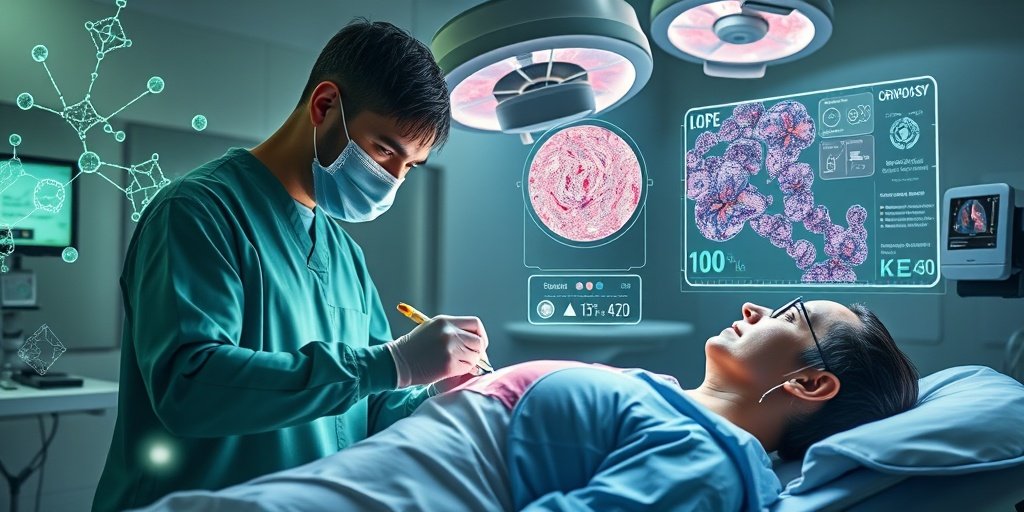
The study highlights the role of transbronchial cryobiopsy (TBCB) as a transformative technique in the diagnosis of diffuse lung diseases and thoracic malignancies. By providing high-quality tissue samples with minimal invasiveness, TBCB enhances the accuracy of histopathological assessments and supports the integration of molecular analyses in precision medicine.
🔍 Key Details
- 📊 Technique: Transbronchial cryobiopsy (TBCB)
- 🧬 Applications: Diagnosis of diffuse lung diseases and thoracic malignancies
- ⚙️ Advantages: Larger, well-preserved tissue samples with minimal invasiveness
- 🏆 Comparison: Superior to conventional forceps biopsy in sample quality and safety
- 🔬 Integration: Supports molecular characterization and AI training for predictive tools
🔑 Key Takeaways
- 🌟 TBCB is a significant advancement in thoracic diagnostics.
- 🧬 Provides high-quality tissue samples for accurate histopathological assessment.
- 📉 Reduces the need for repeat biopsies, facilitating prompt diagnosis.
- ⚠️ Lower risk of serious complications compared to traditional biopsy methods.
- 🤖 Contributes to the development of AI-driven predictive tools for diagnosis and treatment.
- 📈 Enhances the identification of diagnostic and prognostic biomarkers.
- 🌍 Study published in Respiratory Medicine, 2025.
- 🆔 PMID: 41349151.
📚 Background
In the context of precision medicine, the need for accurate and timely diagnosis of lung diseases has never been more critical. Traditional biopsy techniques often fall short in providing sufficient tissue samples, particularly in fragile patients or those with severe comorbidities. The emergence of TBCB addresses these challenges, offering a minimally invasive solution that aligns with the evolving landscape of thoracic diagnostics.
🗒️ Study
This review critically evaluates the evidence supporting TBCB as a superior alternative to traditional biopsy techniques. The authors focus on its role in the molecular characterization of thoracic tumors and interstitial lung diseases, emphasizing the importance of obtaining high-quality tissue samples for comprehensive analyses.
📈 Results
TBCB has demonstrated a significant advantage over conventional forceps biopsy techniques, particularly in terms of sample quality and safety profile. The technique allows for immediate freezing of tissue samples, providing a precise snapshot of the disease at the time of collection, which is crucial for accurate diagnosis and treatment planning.
🌍 Impact and Implications
The integration of TBCB into clinical practice represents a major leap forward in the field of thoracic diagnostics. By enabling the collection of high-quality tissue samples, TBCB not only enhances diagnostic accuracy but also supports the identification of new biomarkers and the development of AI-driven predictive tools. This convergence of histopathology, omics, radiomics, and artificial intelligence holds great promise for improving patient outcomes in complex pulmonary conditions.
🔮 Conclusion
The findings from this study underscore the transformative potential of transbronchial cryobiopsy in the era of precision medicine. As we continue to explore innovative diagnostic techniques, TBCB stands out as a critical tool that enhances our ability to diagnose and treat lung diseases effectively. The future of thoracic diagnostics looks promising, with TBCB paving the way for improved patient care and outcomes.
💬 Your comments
What are your thoughts on the advancements in thoracic diagnostics with TBCB? We would love to hear your insights! 💬 Leave your comments below or connect with us on social media:
Transbronchial cryobiopsy in the era of precision thoracic diagnostics: Histopathology, omics, radiomics, and AI converge.
Abstract
In the era of precision medicine, transbronchial cryobiopsy (TBCB) has emerged as a significant technological advancement supporting the diagnosis of diffuse lung diseases and thoracic malignancies. The advent of targeted therapies, along with the increasing need to identify new diagnostic and prognostic biomarkers, has made it essential to adopt innovative surgical techniques capable of obtaining large, well-preserved tissue samples. This approach not only enables accurate histopathological assessment but also allows for comprehensive molecular analyses, while meeting the requirement for minimal invasiveness in particularly fragile patients or those with severe comorbidities. Tissue samples obtained via TBCB are immediately frozen, offering a precise snapshot of the disease at the time of collection. The sample size is generally sufficient for further molecular testing, thereby reducing the need for repeat biopsies and enabling prompt and accurate diagnosis-an essential element in the treatment pathway for patients with complex pulmonary conditions, both oncologic and interstitial. Although surgical lung biopsy remains the gold standard in terms of diagnostic accuracy, TBCB has demonstrated superiority over conventional forceps biopsy techniques, both in terms of sample quality and safety profile, with a significantly lower risk of serious complications. This review aims to critically evaluate the available evidence supporting TBCB compared to traditional techniques, with a particular focus on its role in the molecular characterization of thoracic tumors and interstitial lung diseases. Furthermore, we explore its integration into a forward-looking framework where TBCB contributes to radiomics and artificial intelligence training, fostering the development of predictive tools for diagnosis, prognosis, and therapeutic response.
Author: [‘Martella S’, ‘Cusumano G’, ‘La Via L’, ‘Palmucci S’, ‘Gili E’, ‘Solinas C’, ‘Stylianakis D’, ‘Muscato G’, ‘Vancheri C’, ‘Terminella A’]
Journal: Respir Med
Citation: Martella S, et al. Transbronchial cryobiopsy in the era of precision thoracic diagnostics: Histopathology, omics, radiomics, and AI converge. Transbronchial cryobiopsy in the era of precision thoracic diagnostics: Histopathology, omics, radiomics, and AI converge. 2025; 251:108574. doi: 10.1016/j.rmed.2025.108574