⚡ Quick Summary
The ADVANCE toolkit introduces an automated video annotation pipeline that significantly enhances the analysis of human behavior in naturalistic settings. This innovative approach reduces the workload for clinicians while improving the ethological validity of video-based assessments.
🔍 Key Details
- 📊 Study Participants: Schoolchildren and adults
- 🎥 Environment: Unscripted clinical setting in an art classroom
- ⚙️ Technology: ADVANCE toolkit for automated video annotation
- 🏆 Achievements: Accurate detection and tracking of individuals, estimation of skeletal joint positions, and pose labeling
🔑 Key Takeaways
- 🤖 ADVANCE toolkit automates the video annotation process, addressing the limitations of manual methods.
- 📈 Enhanced efficiency in clinical settings by reducing time and bias in behavior analysis.
- 🌍 Versatile application demonstrated in both children and adults across various dynamic scenarios.
- 🔍 Improved data extraction capabilities from video recordings in naturalistic environments.
- 💡 Scalable solutions for behavior analyses, making it suitable for diverse research contexts.
- 🏫 Real-world application showcased in an art classroom setting, highlighting its practical utility.
📚 Background
Video recordings have become a vital tool for observing behaviors in both humans and animals. However, traditional methods of analysis often rely on manual annotation, which can be time-consuming, biased, and cost-ineffective. The need for a more efficient and reliable method of analyzing video data has led to the development of machine learning technologies, yet many of these solutions require highly controlled environments, limiting their applicability.
🗒️ Study
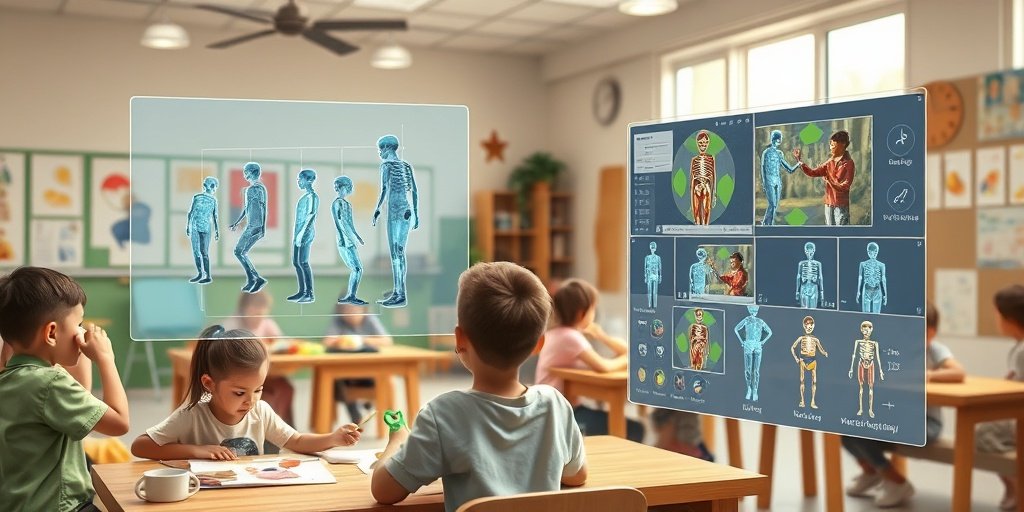
The study presented the ADVANCE toolkit, which was tested in an unscripted clinical setting involving schoolchildren and adults in an art classroom. The aim was to demonstrate the toolkit’s ability to automate the annotation process, allowing for simultaneous tracking of multiple individuals and accurate pose estimation in a dynamic environment.
📈 Results
The ADVANCE toolkit successfully detected and tracked each individual throughout the recording, even when they left and re-entered the field of view. It estimated the positions of skeletal joints and labeled poses accurately, showcasing its potential to resolve the challenges associated with manual annotation. This advancement significantly enhances the ability to extract valuable information from video recordings.
🌍 Impact and Implications
The introduction of the ADVANCE toolkit could revolutionize the field of behavioral analysis. By automating the annotation process, it not only reduces the clinical workload but also enhances the ethological validity of assessments. This toolkit opens up new avenues for research and clinical applications, allowing for more accurate and scalable behavior analyses in naturalistic contexts.
🔮 Conclusion
The ADVANCE toolkit represents a significant breakthrough in the automation of video annotation for behavioral studies. By addressing the limitations of traditional methods, it offers a promising solution for clinicians and researchers alike. As we continue to explore the potential of such technologies, the future of behavior analysis looks increasingly bright and efficient.
💬 Your comments
What are your thoughts on the ADVANCE toolkit and its potential impact on behavioral analysis? We would love to hear your insights! 💬 Leave your comments below or connect with us on social media:
The ADVANCE toolkit: Automated descriptive video annotation in naturalistic child environments.
Abstract
Video recordings are commonplace for observing human and animal behaviours, including interindividual interactions. In studies of humans, analyses for clinical applications remain particularly cumbersome, requiring human-based annotation that is time-consuming, bias-prone, and cost-ineffective. Attempts to use machine learning to address these limitations still oftentimes require highly standardised environments, scripted scenarios, and forward-facing individuals. Here, we provide the ADVANCE toolkit, an automated video annotation pipeline. The versatility of ADVANCE is demonstrated with schoolchildren and adults in an unscripted clinical setting within an art classroom environment that included 2-5 individuals, dynamic occlusions, and large variations in actions. We accurately detected each individual, tracked them simultaneously throughout the duration of the recording (including when an individual left and re-entered the field of view), estimated the position of their skeletal joints, and labelled their poses. By resolving challenges of manual annotation, we radically enhance the ability to extract information from video recordings across different scenarios and settings. This toolkit reduces clinical workload and enhances the ethological validity of video-based assessments, offering scalable solutions for behaviour analyses in naturalistic contexts.
Author: [‘Middelmann NK’, ‘Calbimonte JP’, ‘Wake EB’, ‘Jaquerod ME’, ‘Junod N’, ‘Glaus J’, ‘Sidiropoulou O’, ‘Plessen KJ’, ‘Murray MM’, ‘Vowels MJ’]
Journal: Behav Res Methods
Citation: Middelmann NK, et al. The ADVANCE toolkit: Automated descriptive video annotation in naturalistic child environments. The ADVANCE toolkit: Automated descriptive video annotation in naturalistic child environments. 2025; 58:3. doi: 10.3758/s13428-025-02883-0