⚡ Quick Summary
This study introduces a novel deep learning approach utilizing a Refined Single Candidate Optimizer (RSCO) for the early detection of precancerous polyps in colonoscopy images. The proposed method outperformed traditional techniques, demonstrating enhanced precision, recall, and accuracy in identifying polyps, which is crucial for reducing colorectal cancer (CRC) mortality rates.
🔍 Key Details
- 📊 Dataset: SUN Colonoscopy Video Database
- 🧩 Features used: Colonoscopy images
- ⚙️ Technology: CaffeNet architecture and Support Vector Machine (SVM)
- 🏆 Performance: Improved metrics compared to CNN/SVM, DNN, GAN2, and DP-CNN
🔑 Key Takeaways
- 🔬 Early detection of polyps is vital for reducing CRC-related deaths.
- 🤖 RSCO enhances traditional optimization methods for better performance.
- 📈 The model showed superior results in precision, recall, and accuracy.
- 🧠 Deep learning techniques are becoming essential in medical imaging.
- 🌟 The study highlights the importance of automation in routine colonoscopy procedures.
- 📅 Published in Sci Rep, 2025.
- 👩🔬 Authors: Wen G, Yan J, Chen X, Bagal HA.
📚 Background
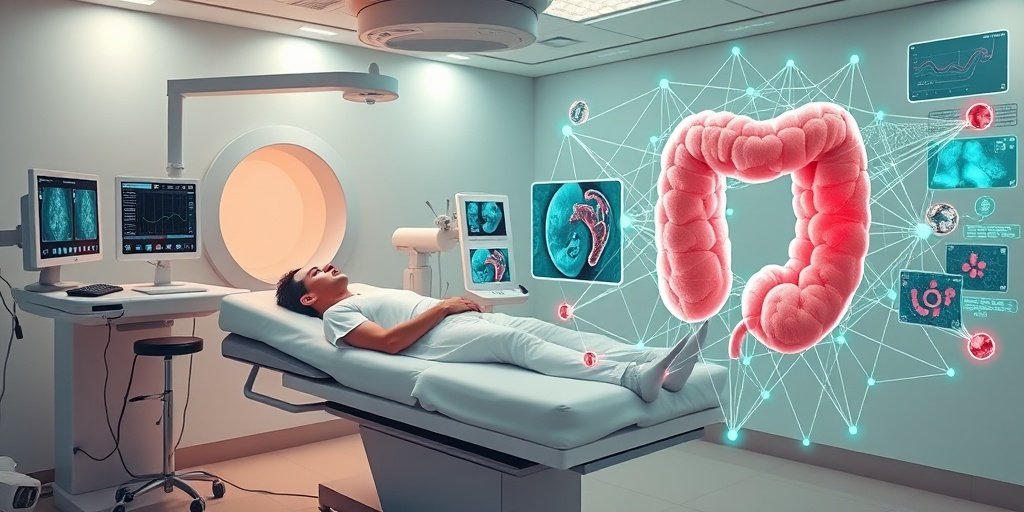
Colorectal cancer (CRC) is a leading cause of cancer-related deaths globally, emphasizing the need for effective early detection strategies. Colonoscopy remains the gold standard for identifying precancerous polyps, but the process can be subjective and prone to human error. The integration of deep learning technologies offers a promising solution to enhance the accuracy and efficiency of polyp detection.
🗒️ Study
This research focused on developing an automated system for polyp detection using colonoscopy images. By employing the CaffeNet architecture for feature extraction and a Support Vector Machine (SVM) for classification, the study aimed to refine the optimization process through the innovative Refined Single Candidate Optimizer (RSCO). This approach seeks to balance exploration and exploitation in the optimization landscape, leading to improved detection capabilities.
📈 Results
The proposed model demonstrated significant improvements over conventional methods, achieving higher precision, recall, and accuracy metrics. The evaluation on the SUN Colonoscopy Video Database confirmed the effectiveness of the RSCO-enhanced deep learning approach, showcasing its potential to assist in the timely diagnosis of CRC through routine colonoscopy.
🌍 Impact and Implications
The findings from this study could have profound implications for colorectal cancer screening practices. By automating polyp detection, healthcare providers can enhance diagnostic accuracy, reduce the burden on medical professionals, and ultimately improve patient outcomes. The integration of advanced deep learning techniques into clinical workflows represents a significant step forward in the fight against CRC.
🔮 Conclusion
This study highlights the transformative potential of deep learning in the realm of medical imaging, particularly for early polyp detection in colonoscopy. The use of the Refined Single Candidate Optimizer (RSCO) marks a significant advancement in optimization techniques, paving the way for more reliable and efficient cancer screening methods. Continued research and development in this area are essential for enhancing early detection strategies and improving patient care.
💬 Your comments
What are your thoughts on the integration of deep learning in early cancer detection? We would love to hear your insights! 💬 Share your comments below or connect with us on social media:
Deep learning with refined single candidate optimizer for early polyp detection.
Abstract
Colorectal cancer (CRC) is one of the most common sources of cancer-related death worldwide. Early detection of these precancerous polyps with the aid of colonoscopy plays an important role in decreasing the burden of CRC. By employing novel optimization techniques, this work proposes a new deep learning-based approach to automate polyp detection using colonoscopy images. Specifically, we use the CaffeNet architecture for extracting features and a Support Vector Machine (SVM) for classification. With the goal of improving both stages, the Refined Single Candidate Optimizer (RSCO) is presented to eliminate the imperfection of traditional optimization approaches and refine the search mechanism from the insight of particle swarm optimization (PSO). This approach demonstrates great potential for supporting dynamic equilibrium between exploration and exploitation in the optimization process, which further helps to improve feature extraction and classification performance. The performance of our proposed model is evaluated on the SUN Colonoscopy Video Database, and its effectiveness is compared with the conventional methods including CNN/SVM, DNN, GAN2, and Dual-path convolutional neural network (DP-CNN). We show better performance in terms of precision, recall and accuracy, and provide evidence for the efficacy of the proposed approach for early polyp detection on routine colonoscopy to assist in the timely diagnosis of CRC.
Author: [‘Wen G’, ‘Yan J’, ‘Chen X’, ‘Bagal HA’]
Journal: Sci Rep
Citation: Wen G, et al. Deep learning with refined single candidate optimizer for early polyp detection. Deep learning with refined single candidate optimizer for early polyp detection. 2025; 15:40483. doi: 10.1038/s41598-025-24374-0