Overview
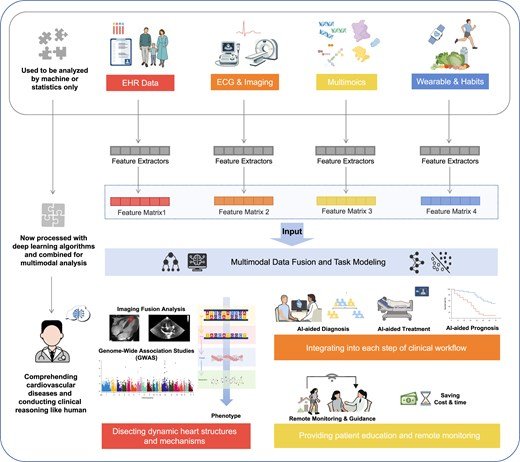
Recent developments in artificial intelligence (AI) are enhancing the diagnosis and treatment of cardiovascular diseases. Traditional AI tools typically analyze a single type of data, such as electrocardiograms or cardiac images, which limits their effectiveness. The introduction of multimodal AI allows for the integration of various data sources, enabling algorithms to provide more comprehensive and personalized insights akin to those of cardiologists.
Key Findings from Recent Research
- The review, conducted by West China Hospital of Sichuan University and the University of Copenhagen, analyzed over 150 studies.
- Combining different modalities, such as echocardiography with computed tomography or cardiac MRI with genomics, significantly improves diagnostic accuracy.
- A transformer-based neural network successfully identified 25 critical pathologies in intensive-care patients, achieving an average area-under-the-curve (AUC) of 0.77.
- Integrating cardiac MRI with genomic data has uncovered new genetic loci affecting aortic valve function, paving the way for targeted prevention strategies.
Enhancing Treatment Selection
Multimodal AI is also refining treatment selection:
- Machine-learning models that incorporate imaging, lab results, and medication history can predict which heart-failure patients will benefit from cardiac resynchronization therapy.
- AI-derived “video biomarkers” from routine echocardiograms can forecast the progression of aortic stenosis, allowing for risk stratification without additional tests.
Continuous Monitoring and Cost Reduction
Home-based monitoring is another area where multimodal AI shows promise:
- Algorithms that combine data from wearables, smartphone apps, and electronic health records can detect early signs of deterioration and provide automated coaching.
- Widespread adoption of multimodal AI could reduce cardiovascular healthcare costs by 5%-10% within five years through improved efficiency and fewer complications.
Challenges Ahead
Despite the potential benefits, several challenges remain:
- Data quality and bias are significant concerns, particularly for underrepresented ethnic and socioeconomic groups.
- The “black-box” nature of deep learning models complicates clinical trust and transparency.
- There is a need for standardized data collection and explainable AI techniques to facilitate safe integration into routine care.
Conclusion
As the field of cardiovascular medicine evolves, multimodal AI is set to play a crucial role in enhancing diagnostic accuracy, treatment selection, and patient monitoring. Ongoing research and collaboration will be essential to address the challenges and fully realize the potential of this technology.